There are countries that impress you. And then there are countries that quietly steal your heart when you're not paying attention. Vietnam is the second kind.
Vietnam is long and the geography matters more here than in most countries. The north, centre, and south are genuinely different in climate, culture, food, and character — almost like three countries stitched together under one flag.
Best time to visit depends entirely on where you’re going. Broadly speaking, November to April is the driest and most comfortable window for most of the country, though the north can be cool and misty from December to February. The central coast gets its heaviest rain between October and December, while the south is at its best from December to April.
The North — Ancient, Dramatic, and Unlike Anywhere on Earth
Hanoi — A City That Lives Outdoors
Vietnam’s capital is not trying to impress you. It’s not glossy or grand in the way some Asian capitals are. Hanoi is lived-in, layered, and deeply atmospheric — a city of narrow streets, French colonial facades softened by decades of monsoons, lakes that appear out of nowhere in the middle of neighbourhoods, and a street food culture so good that the pavements themselves feel like restaurants.
Start at the Old Quarter, where 36 ancient trade streets still roughly sell what they always have — paper on Hang Ma, tin on Hang Thiec, silk on Hang Gai. Wander without a map. Get beautifully lost. Drink egg coffee (ca phe trung) at a tiny café up a staircase you almost missed, looking out over a grey and golden street below.
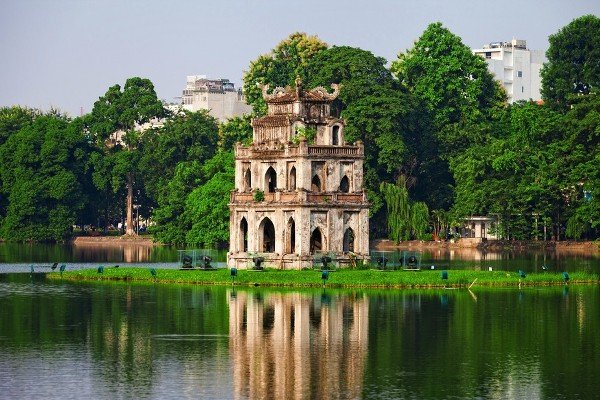
Visit Hoan Kiem Lake at dawn when the locals come out to do tai chi, badminton, and morning walks around its misty shores. The red Huc Bridge leading to Ngoc Son Temple on its little island is one of the most quietly magical sights in all of Asia.
Eat everything. The Bun Cha (grilled pork with noodles and herbs) in Hanoi is different from anything you’ll taste in the south — smokier, more complex. The Banh Mi here comes stuffed with different fillings than its Ho Chi Minh City cousin. Even the Pho — Vietnam’s most famous dish — has a northern version that is cleaner, more delicate, and deeply satisfying.
Ha Long Bay — One of the World’s Great Sights
You’ve seen the photographs. The reality is better.
Thousands of limestone karst islands rising vertically from green-grey water, draped in jungle, scattered across a bay so large it takes two days to properly explore. Ha Long Bay is genuinely one of the most dramatic natural landscapes on earth, and the best way to experience it is on an overnight cruise — watching the islands turn gold at sunset, kayaking into hidden lagoons and sea caves at dawn, and waking up surrounded by silence and mist before the day begins.
Go for at least two nights if you can. One night is never quite enough. Choose your cruise carefully — the quality varies enormously between budget and mid-range operators, and a better boat makes a significant difference to the experience. Bai Tu Long Bay and Lan Ha Bay are quieter, less crowded alternatives that many seasoned travellers now prefer.
Sapa — Where the Mountains Meet the Clouds
Up in Vietnam’s far northwest, near the Chinese border, the world goes quiet and green and impossibly beautiful. Sapa sits in a valley surrounded by terraced rice fields that cascade down mountainsides in ribbons of emerald and gold, worked by the hands of the Hmong, Dao, Tay, and Giay ethnic minority communities who have farmed this land for generations.
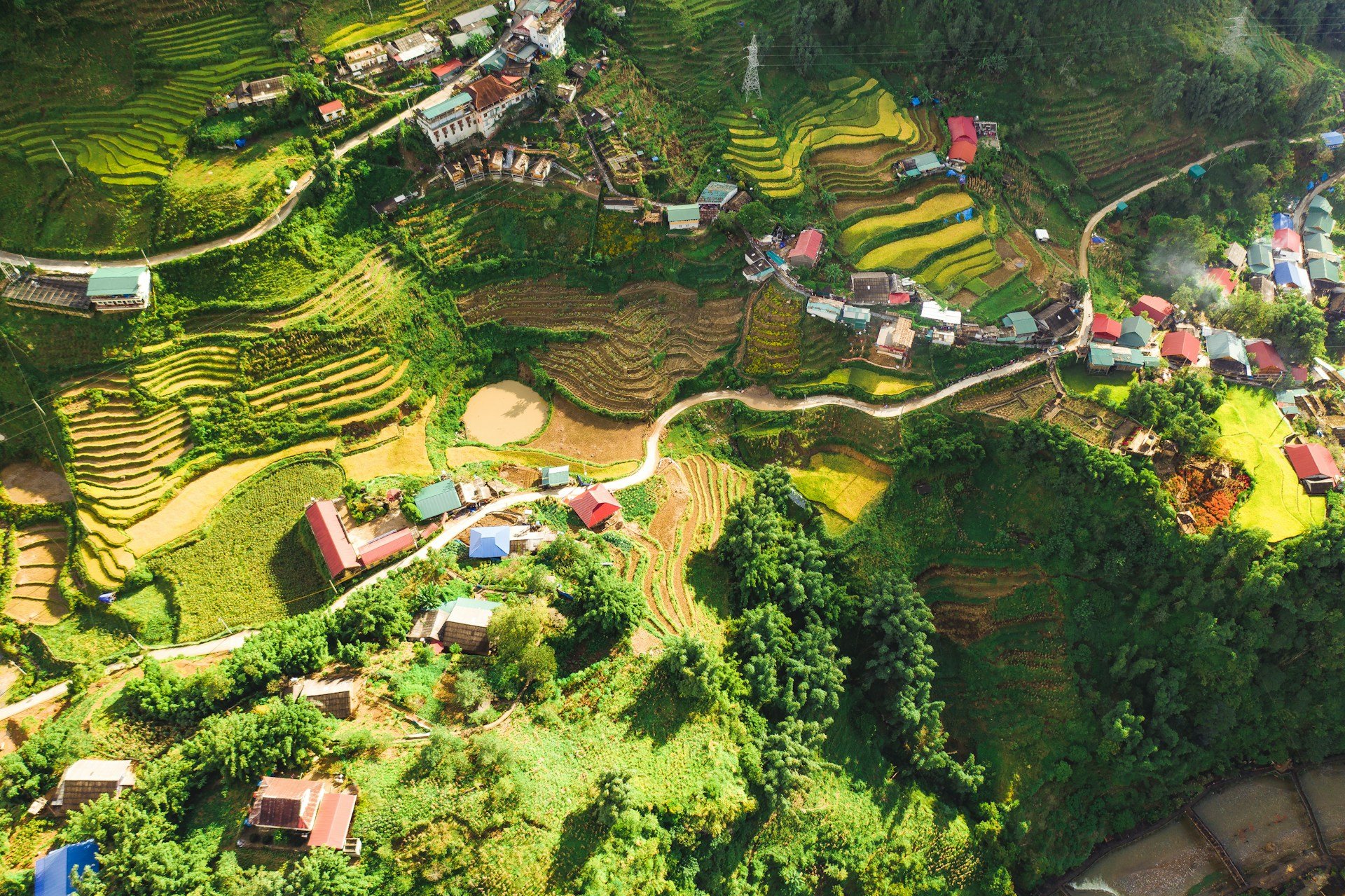
Trek through the valleys. Visit the villages. Wake up before sunrise and watch the clouds fill the valley below you like a slow white sea. In September and October, when the rice is ripe, the terraces turn the colour of fire and it is one of the most beautiful things I have ever seen anywhere in the world.
The town of Sapa itself has grown crowded and touristy in recent years — stay in a village homestay if you can, or base yourself in the valley for a more authentic experience.
The Centre — History, Heritage, and the Best Food in Vietnam
Hue — The Imperial City
Hue is Vietnam’s soul. The former imperial capital of the Nguyen Dynasty, it sits along the banks of the Perfume River and carries its history with a quiet, melancholy dignity. The Imperial Citadel — a vast, crumbling complex of palaces, gates, and gardens inspired by Beijing’s Forbidden City — is extraordinary to walk through, especially in the early morning before the crowds arrive.
But what stays with you about Hue is not the monuments. It’s the food. Hue is widely considered to have the finest and most sophisticated cuisine in all of Vietnam — a legacy of cooking for emperors.
Bun Bo Hue (spicy lemongrass beef noodle soup) is richer and more complex than pho. Banh Khoai (crispy crepe stuffed with shrimp and pork) is extraordinary. Com Hen (tiny clams on rice with a dozen fresh herbs and condiments) is unlike anything else in the country.Spend two full days here at minimum. Take a boat along the Perfume River at dusk. Visit the royal tombs scattered in the hills outside the city, each with its own personality and atmosphere.
Hoi An — The Town That Stopped in Time
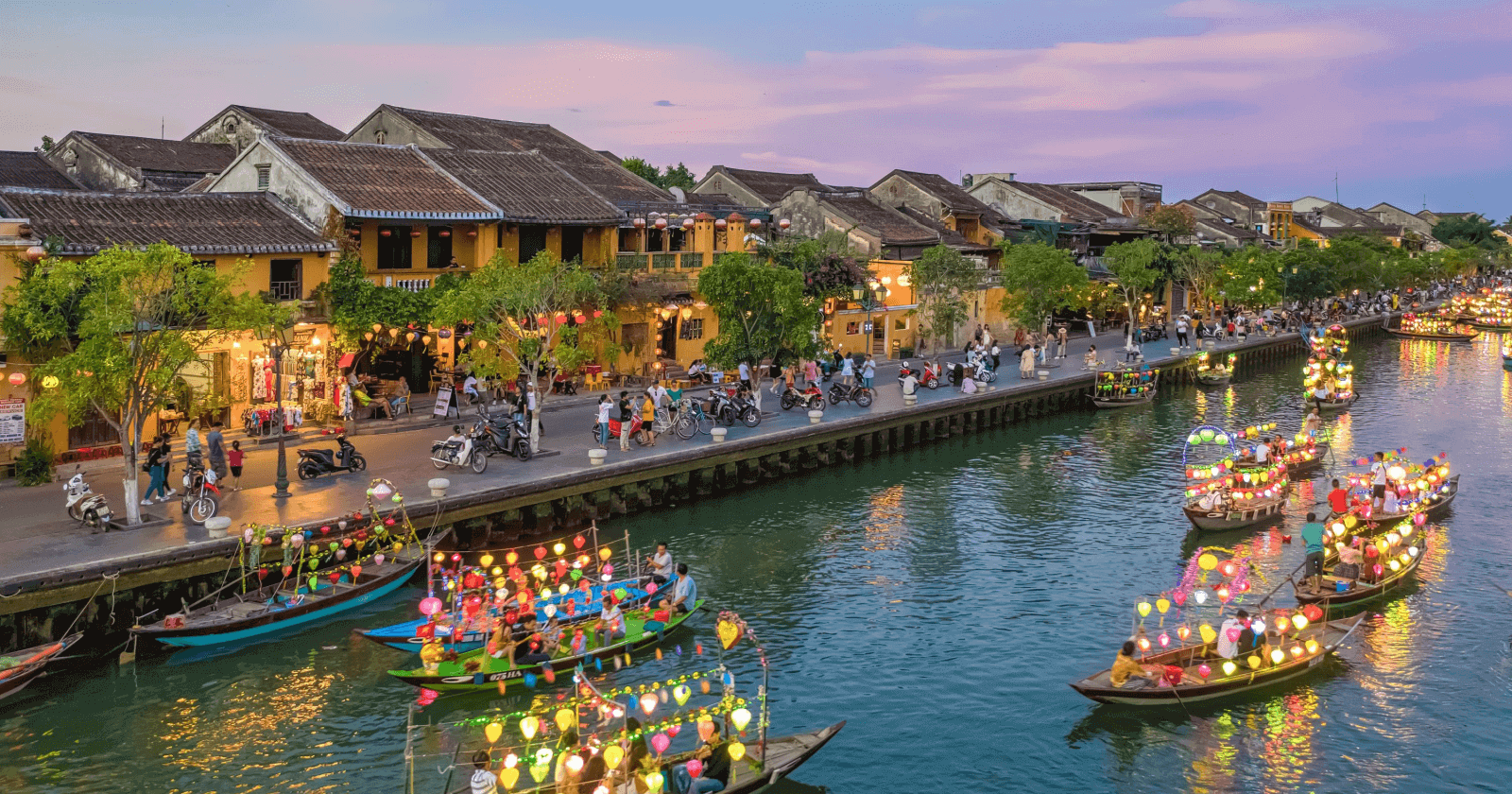
Hoi An is special in a way that’s genuinely hard to explain until you’re standing in it. A former trading port where Chinese, Japanese, and Vietnamese merchants lived and worked side by side for centuries, its Ancient Town is so remarkably preserved that it feels less like a tourist attraction and more like a living, breathing relic.
Lanterns hang from every building in the old quarter — yellow walls strung with silk lanterns of red and gold and violet that glow at night like something from a dream. The narrow streets are filled with tailors’ shops, art galleries, incense-scented temples, and the best White Rose dumplings (Banh Bao Vac) you will ever eat.
Rent a bicycle and cycle out to the nearby rice paddies and fishing villages in the early morning. Take a cooking class — Hoi An’s cooking classes are among the best in Southeast Asia. On the 14th of each lunar month, the town turns off its electric lights for the Lantern Festival and the old quarter glows entirely by candlelight and lantern. If you can time your visit around this, do.
The nearby beach at An Bang or Cua Dai is excellent for a half-day of rest between cultural sightseeing.
Ho Chi Minh City (Saigon) — The City That Never Stops
If Hanoi is a thoughtful conversation over coffee, Ho Chi Minh City is a party that started before you arrived and will be going long after you leave. Vietnam’s largest city is electric — noisy, hot, fast-moving, and endlessly stimulating.
The Ben Thanh Market still buzzes even if it’s become tourist-oriented. The War Remnants Museum is one of the most powerful and sobering museums in Southeast Asia — essential viewing even if it’s difficult. The rooftop bars of District 1 glow at night over a skyline that is growing taller every year. District 3 is where you go for good coffee, independent bookshops, and the kind of neighbourhood atmosphere that reminds you this is a real city where real people live extraordinary ordinary lives.
Eat in Pham Ngu Lao for budget street food. Eat in District 1 for modern Vietnamese cuisine done at a very high level. Eat anywhere that has a plastic stool, a charcoal grill, and a crowd of locals — that is always the best sign.
Phu Quoc — Vietnam’s Island Paradise
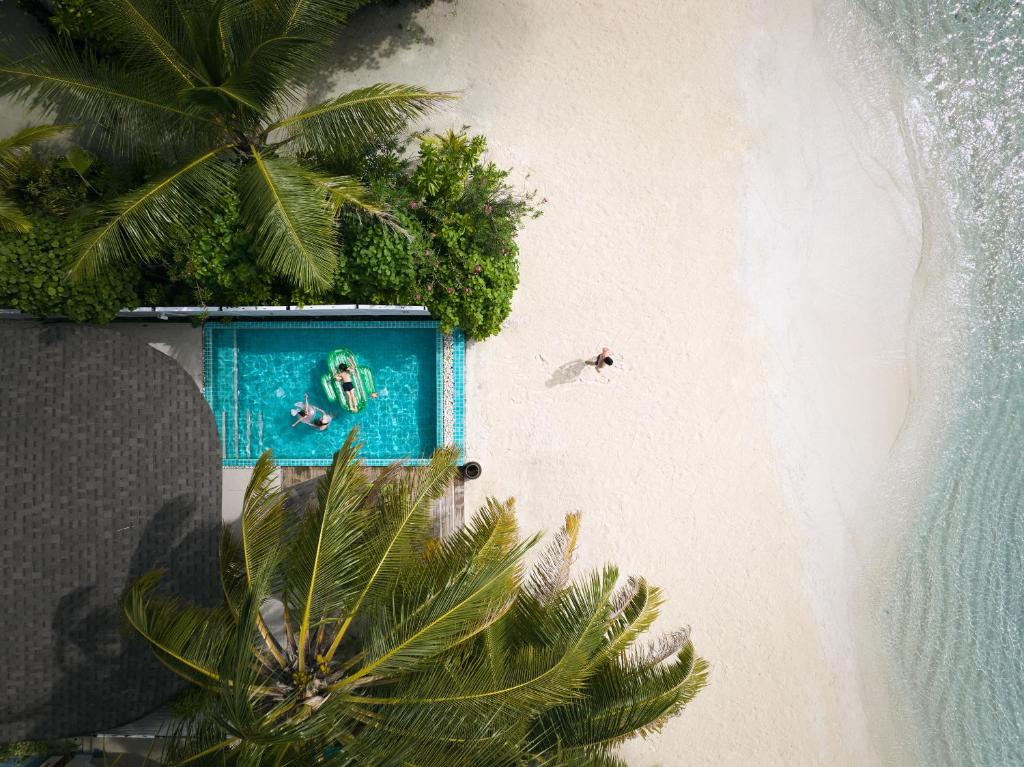
Off the far southwestern coast, Phu Quoc has transformed dramatically in recent years from a quiet fishing island to a full resort destination. The Long Beach sunset is spectacular. The fish sauce produced here is the finest in Vietnam — the island has been making it for centuries and the smell alone tells you you’re somewhere special.
The northern and eastern parts of the island are still relatively undeveloped and worth exploring by motorbike. The seafood — eaten at a simple restaurant right by the water — is some of the freshest I’ve had anywhere in Asia.


Vietnam
Timeless Charm Vietnam
What to Eat — Vietnam’s Greatest Gift to the World
Vietnamese cuisine is arguably the finest street food culture on earth. It is fresh, complex, balanced, and endlessly varied — and it is almost always better and cheaper when eaten on a tiny plastic stool on a pavement than in any restaurant.
The non-negotiables:
Pho — the national dish. Beef or chicken broth, rice noodles, fresh herbs, a squeeze of lime. Eaten at breakfast. Eaten at midnight. Eaten always.
Banh Mi — a baguette legacy of French colonialism, filled with pâté, pickled vegetables, fresh chilli, coriander, and your choice of protein. One of the world’s great sandwiches.
Bun Bo Hue — spicy lemongrass beef soup from Hue. Richer, redder, and more complex than pho.
Cao Lau — a Hoi An speciality of thick noodles, pork, and greens that supposedly can only be made authentically using water from a specific local well. Whether or not that’s true, it is extraordinary.
Goi Cuon — fresh spring rolls. Rice paper wrapped around shrimp, pork, vermicelli, and herbs. Light, cool, and perfect in the heat.
Banh Xeo — sizzling crepe of rice flour and turmeric, filled with shrimp, pork, and bean sprouts. Eaten by wrapping it in lettuce leaves with fresh herbs and dipping in nuoc cham sauce.
Ca Phe Trung — Hanoi’s egg coffee. Strong Vietnamese coffee topped with a whipped egg yolk and condensed milk foam. Sounds unusual. Tastes like dessert and coffee had a beautiful baby.
Getting Around Vietnam
The country is long and distances are real. Here’s how most travellers navigate it:
Flying is the fastest option between major cities — Vietnam Airlines, VietJet, and Bamboo Airways all offer affordable domestic routes. Hanoi to Ho Chi Minh City by air takes about two hours.
The Reunification Express train runs the full length of the country from Hanoi to Ho Chi Minh City — a 30-hour journey that many travellers break into sections, taking the scenic overnight train between cities. The stretch between Hue and Da Nang, crossing the Hai Van Pass, is particularly beautiful.
Sleeper buses connect most cities cheaply and are used widely by budget travellers. They’re comfortable enough for overnight journeys of 8–10 hours.
Motorbikes are how Vietnam moves at street level — and renting one, if you’re an experienced rider, gives you a freedom here that no other form of transport matches.
A Final Thought
Vietnam asks something of you. It asks you to slow down when the streets get chaotic, to sit with the noise and the heat and the beautiful disorder of it all, to be present in a way that travel — at its best — always demands.
Comment (0)