from 0 review
2 Nights 3 Days
No Cancellation
1 people
English
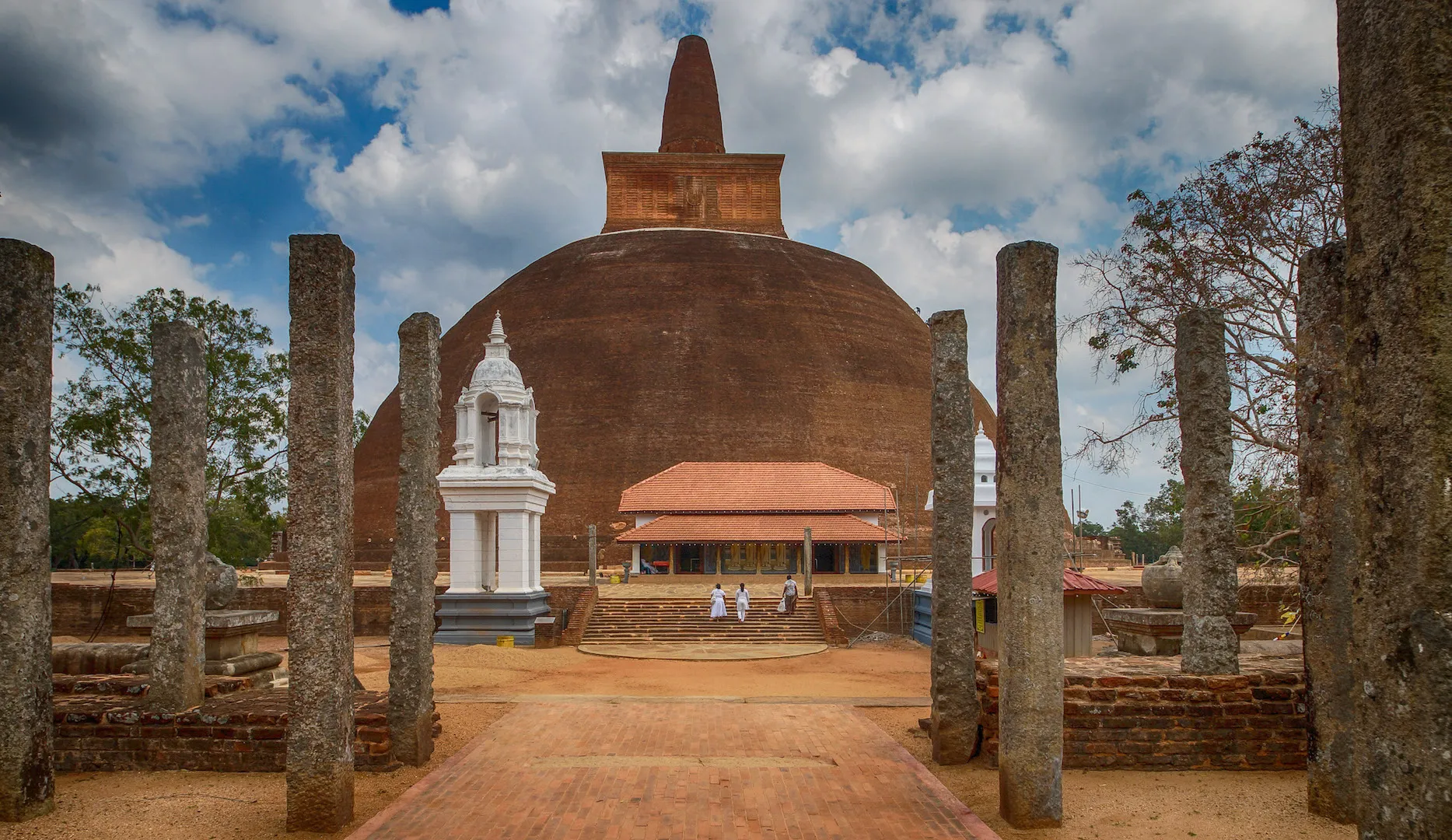
Deep in the dry northern plains, the ancient city of Anuradhapura was once one of the greatest cities in the ancient world — a metropolis of palaces, parks, and sacred monuments that rivalled anything in Rome or Alexandria at its height. Founded in the 4th century BC, it served as Sri Lanka’s first capital for over a millennium, and the ruins that remain today are staggering in their scale and ambition.
At the heart of Anuradhapura stands the Sri Maha Bodhi — a sacred fig tree grown from a cutting of the very tree under which the Buddha attained enlightenment. Planted in 288 BC, it is the oldest historically documented tree in the world, and pilgrims have been coming to sit beneath its branches and offer their prayers for over two thousand years. To stand beside it is to feel the full, quiet weight of that continuity.
Here is what awaits you beyond the temple gates.
Anuradhapura sits at the edge of some of Sri Lanka’s most rewarding and least-visited wilderness. Climb into a jeep as the early morning mist still clings to the trees, and let an experienced naturalist guide you deep into the surrounding forests and tank landscapes where wildlife moves freely and unhurriedly.
Spot elephants grazing at the water’s edge, leopards resting in the branches overhead, sloth bears lumbering through the undergrowth, and a dazzling variety of birds that make this region one of Sri Lanka’s finest birdwatching destinations. This is not a zoo or a performance — it is the real, breathing wild, and every drive brings something different and completely unscripted.
Come at dawn. Stay until the light turns gold. Let the jungle do the rest.
In the ancient dry zone landscape surrounding Anuradhapura — where the nights are warm, the air is clean, and the silence is the kind you only find far from city life — camping becomes something close to a spiritual experience.
Set up beside a glittering ancient reservoir or under the canopy of a forest clearing, and let the world slow down to its natural rhythm. Watch the sunset paint the sky in shades of amber and rose over the still water. Fall asleep to the sounds of the night jungle — the chirp of crickets, the distant call of a nightjar, the occasional rustle of something moving through the darkness nearby.
Wake before dawn and watch the light return to the world. There is a particular quality to a morning in this ancient landscape that is very difficult to describe — and very easy to fall in love with.
Anuradhapura is home to a network of magnificent ancient reservoirs — or tanks — built by the great kings of the ancient kingdom over two thousand years ago as extraordinary feats of hydraulic engineering. They still hold water today. They still sustain life. And gliding across them by boat is one of the most quietly beautiful experiences the region has to offer.
Drift across the glassy surface of the Tissa Wewa, Nuwara Wewa, or Basawak Kulama as egrets and painted storks stand motionless at the water’s edge, elephants come down to drink in the late afternoon, and the ancient ruins of the city shimmer on the horizon in the fading light.
It is the kind of experience that asks nothing of you except to be present — and gives back far more than you expect.
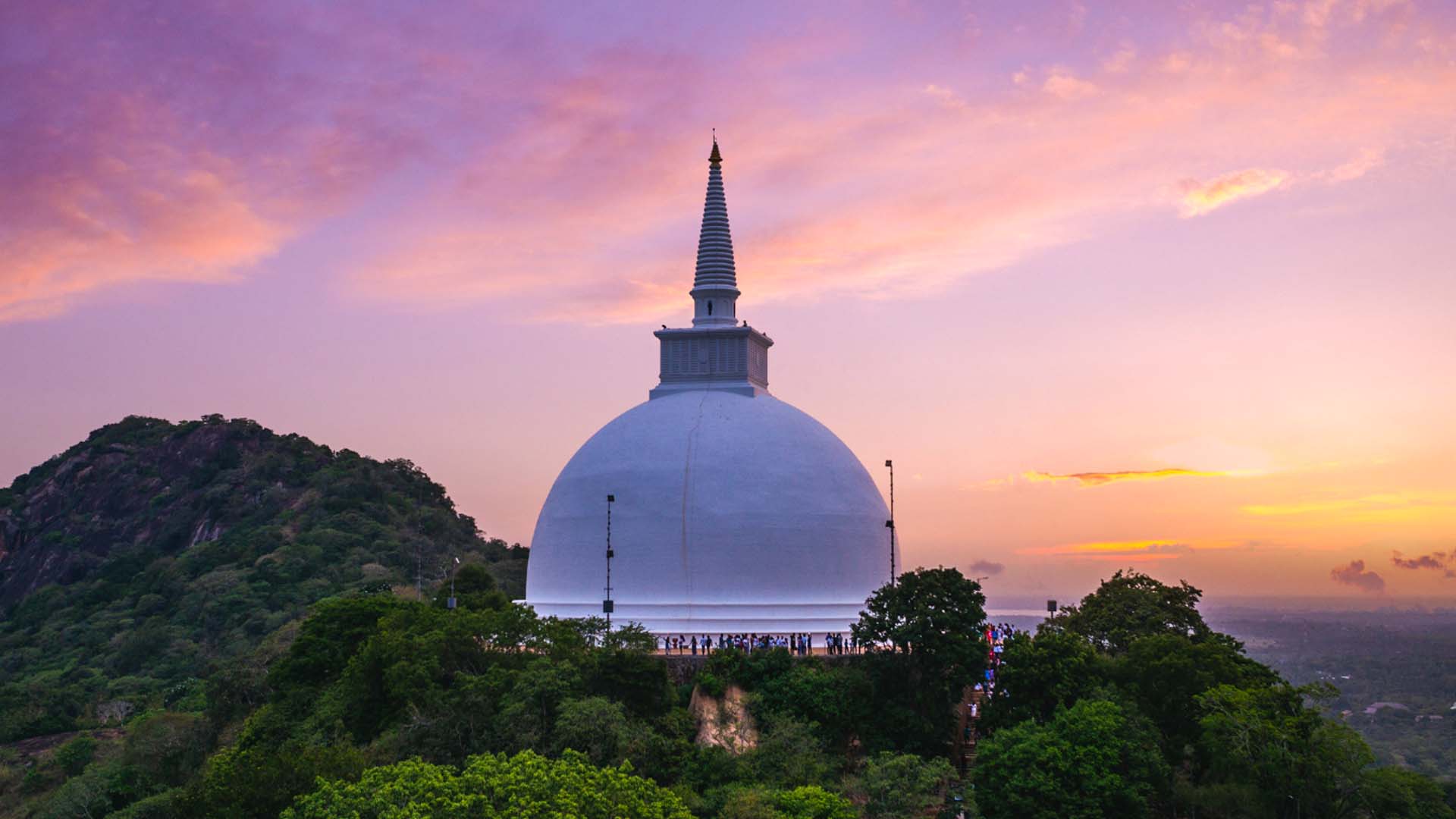
There are views, and then there are views that rearrange something inside you. Floating above Anuradhapura in a hot air balloon at sunrise — watching the great white domes of the ancient stupas emerge from the morning mist, the reservoirs catching the first light, the jungle stretching endlessly in every direction — is firmly in the second category.
From high above, the sheer scale of this ancient civilisation becomes suddenly, almost overwhelmingly clear. The stupas that seemed large from the ground look monumental from the air. The tanks that sustained a great kingdom for a thousand years reveal their true magnificence. And the landscape — green and gold and ancient and alive — unfolds beneath you like a map of something sacred.
It is, quite simply, one of the most beautiful ways to begin a day in Sri Lanka.
Lace up your boots and step off the beaten path into the remarkable natural landscape that surrounds Anuradhapura. The region’s trails wind through dry zone forest, past forgotten ancient ruins half-swallowed by jungle, alongside the bunds of great reservoirs where wildlife gathers in the early morning and late afternoon, and through landscapes of such quiet, understated beauty that you find yourself stopping often — not because you are tired, but because you simply cannot walk past what you are seeing.
Guided treks can be tailored to your pace and interest — whether you want a gentle morning walk through the forest with a naturalist, a more challenging full-day trail to remote ruins rarely visited by tourists, or something in between. Bring water, wear good shoes, start early, and prepare to see Anuradhapura from a perspective that most visitors never discover.
Take to the water in a different way entirely and paddle your kayak through the narrow, overgrown waterways and jungle-fringed channels that connect the ancient tanks and reservoirs of the Anuradhapura region. This is adventure at its most intimate and most immersive.
Move quietly through corridors of overhanging trees where kingfishers dart like jewels across the water, monitor lizards bask on sun-warmed rocks, and the sounds of the jungle close in around you in the most thrilling and peaceful way imaginable. Around every bend, something new — a heron lifting off in slow motion, a family of macaques watching from the branches, a glimpse through the trees of an ancient stone structure reclaimed by the forest.
Jungle kayaking in Anuradhapura is one of those experiences that reminds you why you travel in the first place.
Ask anyone who has explored Anuradhapura well, and they will almost certainly tell you the same thing: the bicycle is the best way to do it.
The ancient city and its surrounding sacred sites are spread across a wide, largely flat landscape of quiet roads, forest paths, and tank-side trails perfectly suited to two wheels and a relaxed pace. Ride from stupa to stupa in the cool of the morning, pause whenever something catches your eye — and something always will — lean your bicycle against an ancient stone wall and sit for a while in the shade of a centuries-old tree.
There is something about the speed of a bicycle that is perfectly calibrated to this place. Fast enough to cover ground, slow enough to actually see and feel and absorb what you are moving through. Guided cycling tours are available for those who want local insight and storytelling along the way — and they are very much worth it.
Cast your line into the calm, ancient waters of one of Anuradhapura’s great reservoirs and enter into a tradition that has been practised on these same waters for well over two thousand years. Fishing in the ancient tanks of the dry zone is an experience of extraordinary peace — the water still and wide, the birds moving slowly overhead, the ruins of the ancient city visible on the distant shore, and time itself seeming to slow to the rhythm of the line in the water.
Whether you are an experienced angler or simply someone who appreciates the meditative quality of sitting quietly beside water with nothing demanding your attention — fishing in Anuradhapura is one of those simple, deeply satisfying pleasures that the best kind of travel always finds room for.
Most visitors spend a day here, tick off the main sacred sites, and move on. And they will have had a wonderful experience. But those who stay longer — who give themselves the time to go on a safari at dawn, to cycle the back roads in the afternoon, to drift across a ancient reservoir at sunset, to sleep under the stars beside the jungle — those travellers leave with something more than photographs and memories.
They leave with a relationship with this place. And that, in the end, is what travel is really for.




Leave a review